
From Keyword to SEO Content: A Real DM AI Assist SEO Generator Example
This guide follows one keyword — "bakery marketing ideas" — through the DM AI Assist SEO Generator, from live search research to a finished draft and a quality check. Along the way I explain which parts are observed search data, which parts are AI interpretation, and what the workflow can't tell you.
The workflow
- Enter a keyword
- Click Research SEO Opportunity
- DM AI Assist fetches live Google results for that keyword through DataForSEO
- Review the competing pages in the results
- Read the search intent interpretation
- Review the SEO content brief
- Send the research to the generator and create the SEO content
- Check the DM AI Assist SEO Quality Score
- Optimise the draft yourself
You can do the same thinking without any tool: search the keyword, open the top results, note what they have in common, and write something more useful. The tool makes that faster and more structured. The SEO checklist for small businesses covers the manual version.
Step 1: The keyword
I chose "bakery marketing ideas" because it's a realistic query a small business owner would type, and it has clear informational intent: the searcher wants a list of ideas, not a product.
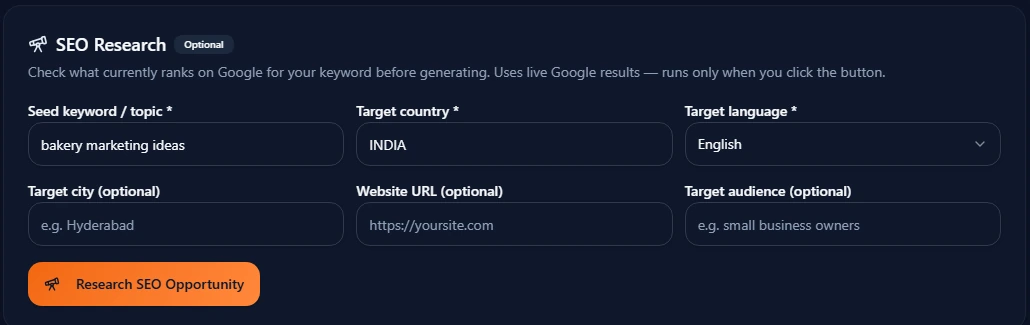
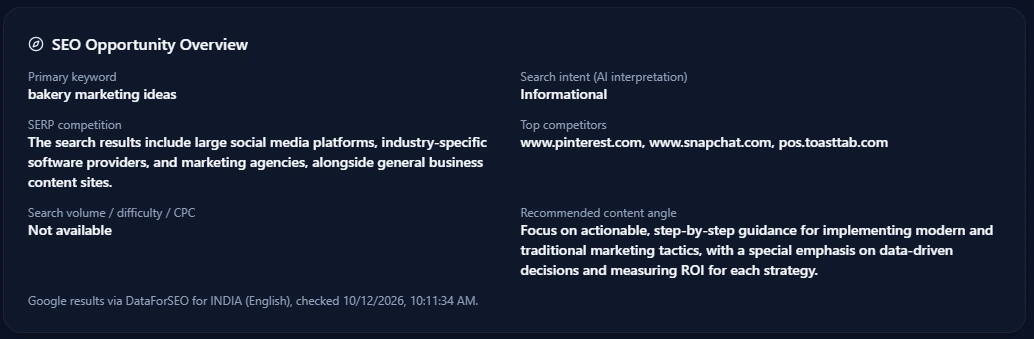
Step 2: SEO Opportunity Overview
After research runs, the overview summarises what was found for the keyword. Treat it as a starting summary, not a verdict on whether you'll rank.
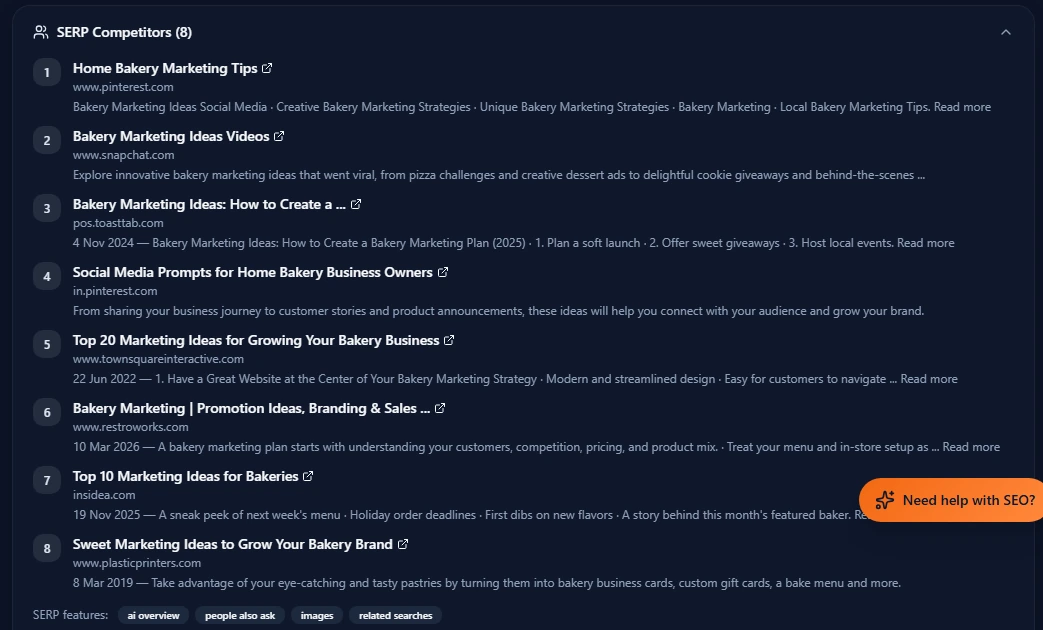
Step 3: Google results competitors
This list shows pages that appeared in live Google results for the keyword at the time of the research, with links you can open. Results change over time and by location, so a list captured today may differ tomorrow.
These pages are research signals. They show what kind of content Google currently shows for the query — lists, guides, templates — and what topics they cover. Their content is not copied into your draft, and you shouldn't copy it either. The point is to understand the bar and then write something more useful.
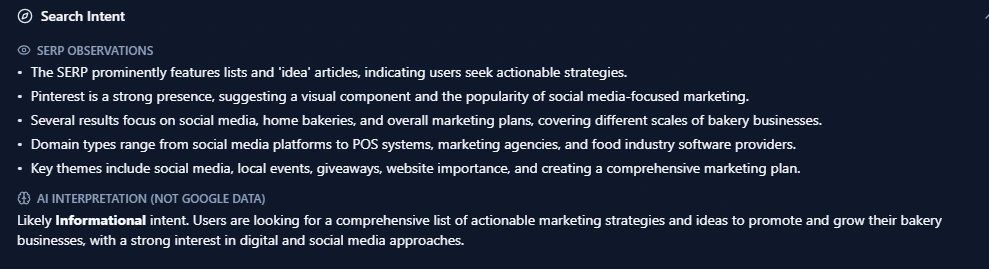
Step 4: Search intent
This is where the difference between data and interpretation matters most, so the screen keeps them separate:
| Observed search data | AI interpretation |
|---|---|
| Facts taken from the live results: page titles, URLs, positions, snippets. | The AI's reading of those facts: what the searcher probably wants and what format fits. |
| Can be checked by searching the keyword yourself. | Is a reasoned guess. It can be wrong and should be checked against your own judgment. |
Step 5: SEO content brief
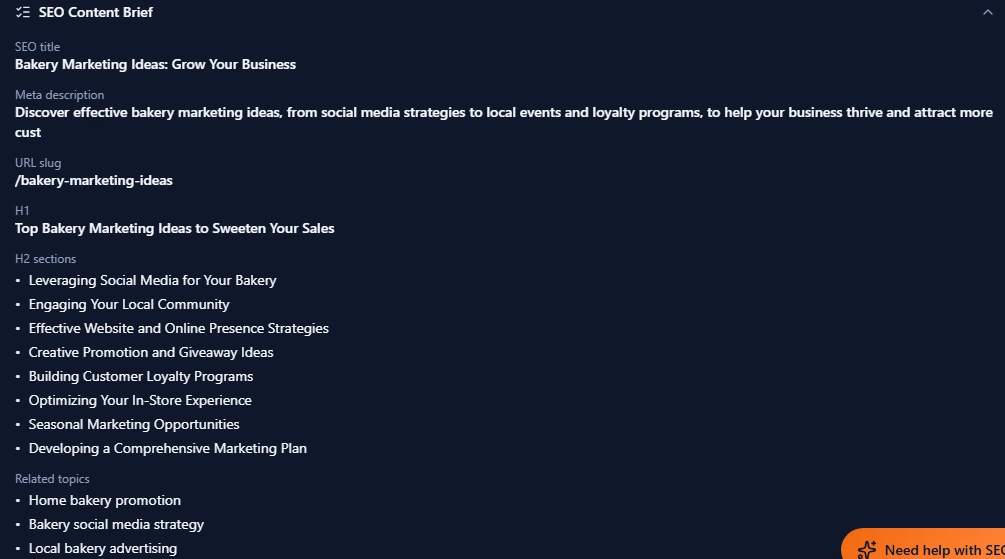
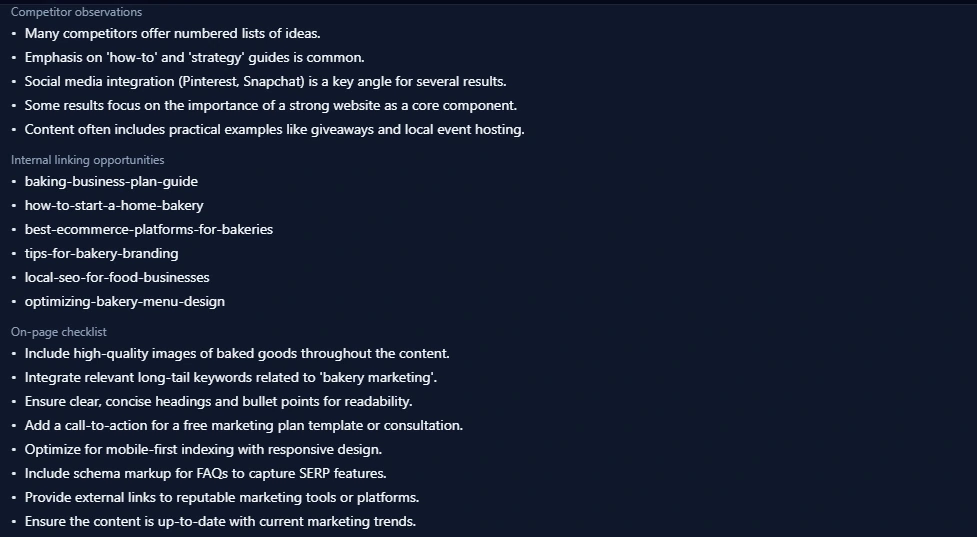
The brief turns the research into a plan: suggested title direction, sections to cover, questions to answer and angles the competing pages may be missing. It's the most useful part of the research for me, because it's what you'd otherwise write by hand after reading ten tabs.
Step 6: Generate the SEO content
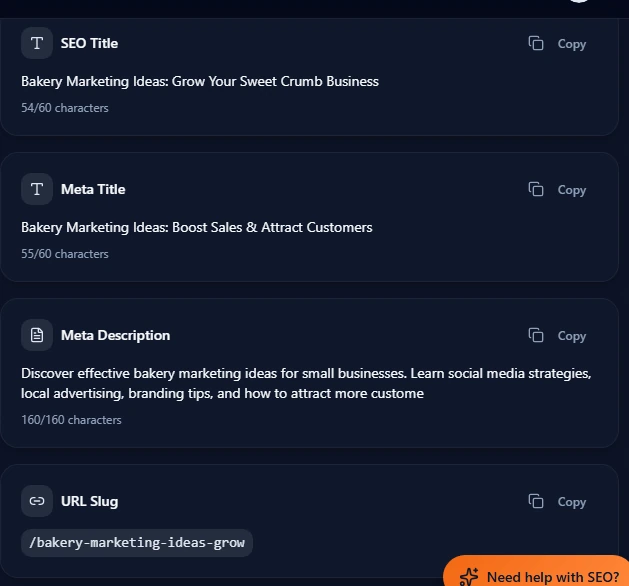
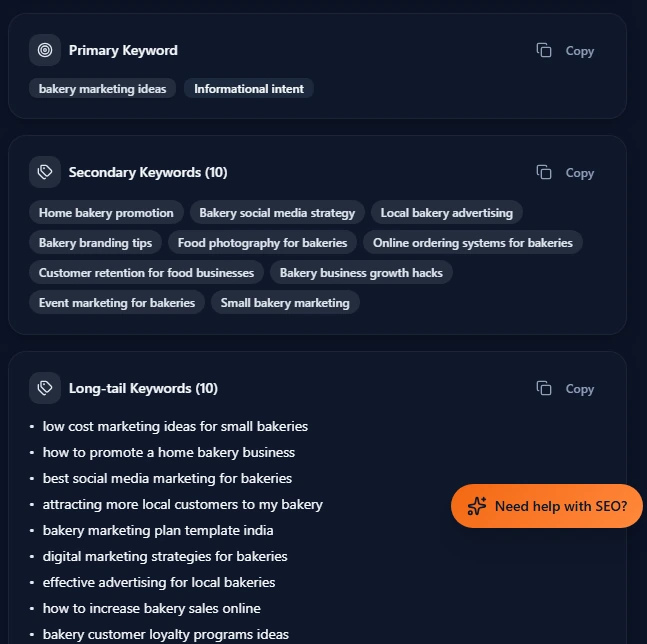
Clicking "Use research in SEO Generator below" passes the research into the regular SEO Generator, which then drafts the title, meta description, outline, content and FAQs with that context. Without research, the generator still works — it just relies on your brief alone.
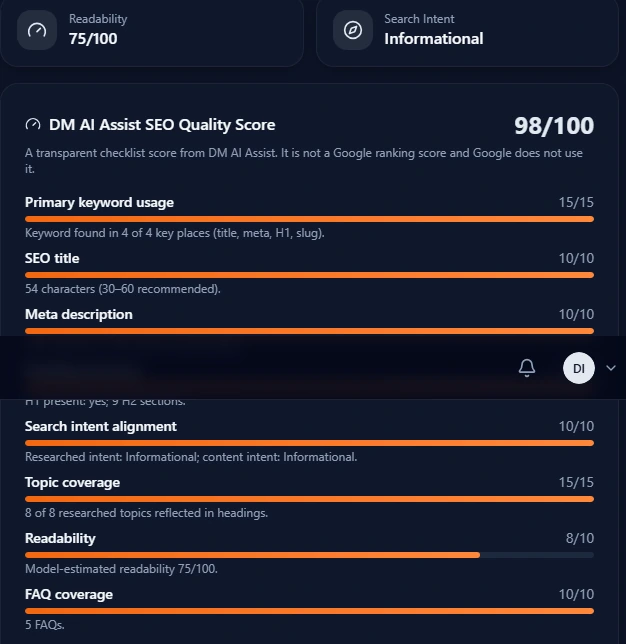
Step 7: What the DM AI Assist SEO Quality Score means
Each result gets a score out of 100 with improvement tips. It checks the draft against internal criteria:
- Keyword usage
- Title
- Meta description
- Heading structure
- Search-intent alignment
- Topic coverage
- Readability
- FAQs
- Internal-link opportunities
- Keyword-stuffing risk
Step 8: Human optimisation
The draft is where my work starts, not where it ends. For a real bakery I'd add things only the business knows: photos of their own cakes, the ideas they've actually tried, their local events, their prices. That first-hand detail is exactly what an AI draft can't supply and what makes a page worth reading.
What DataForSEO contributes
DataForSEO is a third-party data provider. DM AI Assist uses its API to fetch live Google search results for a keyword, which gives the AI real research context instead of guessing what ranks. There's no partnership or endorsement — DM AI Assist is simply a paying API user.
What this workflow cannot tell you
- Whether your page will rank, or in what position.
- How much traffic or how many conversions you'll get.
- Your competitors' full strategy — only what's visible in the results.
- Search volume, keyword difficulty and cost per click. These show as "Not available" in the current version of SEO Research, which only uses live search results.
If you're weighing organic content against paid search for a keyword like this, see SEO vs Google Ads. To see how this step fits into a full campaign, read how I use DM AI Assist to build a complete campaign, and for choosing tools in general, the AI marketing assistant guide.
Put this into practice
DM AI Assist turns a short brief into publish-ready marketing content you can edit and reuse.
Abhinay Adla — Creator of DM AI Assist. About the author